Mobee · Reckless Abandon
Mission Abandonment Back to Normal Levels After 40% High
How systematic root-cause analysis, cross-functional alignment, and critical user-flow refactoring successfully rescued user retention and brought mission abandonment back to baseline.
00 - Context
The Spiking Abandonment Dilemma
The Challenge
Post-Release Drop Spikes
Following a major update, mission abandonment surged to an unsustainable 40%. Traditional bug reports showed no clear technical culprits, prompting a dedicated discovery effort.
What Is Abandonment?
The 3-Hour Reservation Window
When a user reserves a mystery shop, they have 3 hours to submit the results. If they fail to finish, the task is abandoned and re-released, slowing real-time brand intelligence.
Recovery Target
40% → 20%
Halving abandonment back to baseline
Through progressive optimizations and bug fixes, the target was to halve the overall abandonment rate back to standard healthy levels.
- 01 · The Challenge
The post-release slump.
We rolled out our ambitious “Survey Engine Rewrite” with clean QA runs, but immediately saw user completion rates fall off a cliff. Veteran mystery shoppers were abandoning tasks at twice their usual frequency, and our critical retail intelligence queues were backing up.
Because abandonment can be triggered by either a hard app crash, an obscure submission loop bug, or simply a user losing patience and walking out of a physical store, the team was operating in the dark. We needed a systematic approach to segregate technical failure from behavioral friction.
“The rewrite looked flawless on paper, but in the field, we were bleeding 40% of active sessions. We had to find out if shoppers were encountering bugs, or if they were just giving up.”
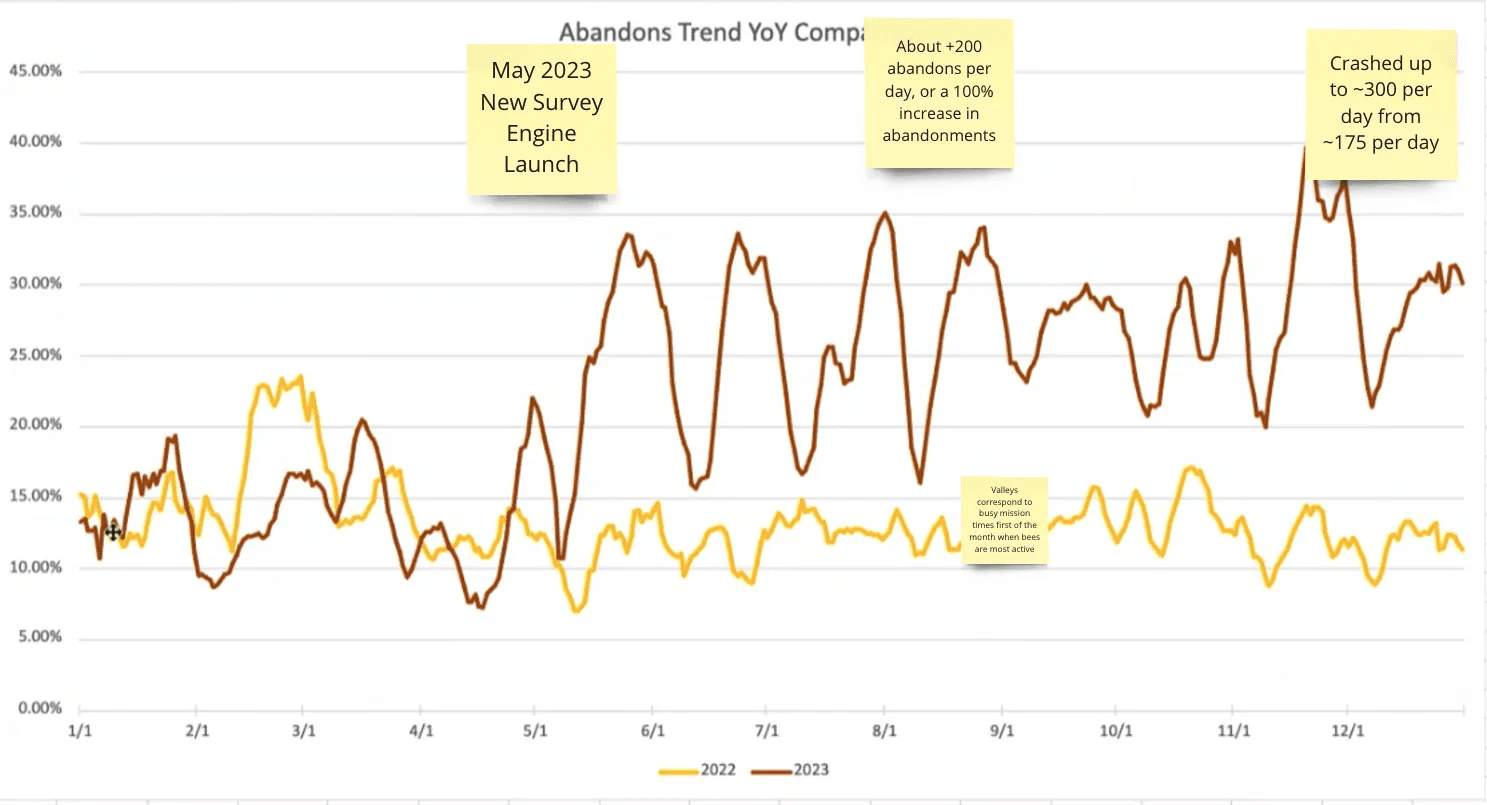
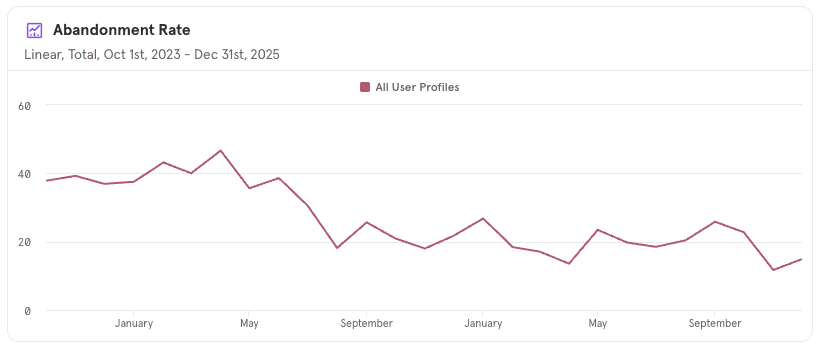
Figure 1: Abandonment rate increased dramatically following the May 2023 release, spiking to an unprecedented 40% before discovery launched.
- 02 · The Brainstorm
Formulating hypotheses.
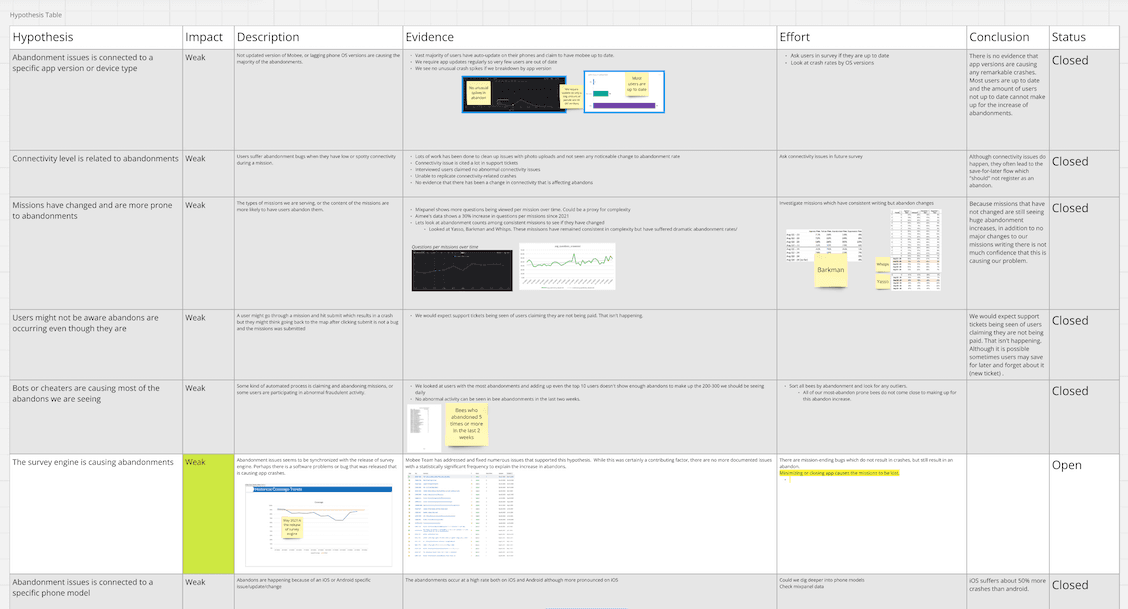
Figure 2: Cross-functional hypothesis mapping matrix utilized by our product, engineering, and operations teams to guide the quantitative discovery.
I brought engineering, UX, and operational coordinators into an intensive workshop. We mapped out seven potential hypotheses for the sudden surge:
- Hidden bugs introduced during the Survey Engine Rewrite
- OS-specific device compatibility/rendering issues
- Wifi and Cellular packet-loss during massive image uploads
- Intentional exits due to changes in physical mission complexity
- Subtle changes in overall marketplace user behavior
- Submission failures where users assumed completion but the app dropped the queue
- Interference from botting or location-spoofing accounts
“We discovered that exactly 50% of the abandonment was entirely intentional behavior, driven by massive structural friction in our upload fallback system.”
- 03 · Hunting for Truth
Triangulating quantitative and qualitative data.
Collaborative Triangulation
To validate our hypotheses, we split investigation streams across departments:
UX RESEARCH & DESIGN
I established automated post-abandonment triggers prompting exit surveys. Over 50% of surveyed users reported leaving intentionally due to UI friction and sheer exhaustion, rather than random crash bugs.
ENGINEERING SYSTEMS
Crashlytics parsing revealed two dozen critical upload and network timeout bugs that were systematically dropping valid survey files, forcing silent failures at the final submission gate.
OPERATIONS ANALYSIS
Even long-standing, untouched legacy tasks saw abandonment double, confirming that the new unified survey engine container was applying systemic friction across the board.
Key Insights Discovered
50%
Intentional Dropouts — driven by exhausting in-store camera steps.
20+
Edge Bugs Fixed — obscure photo pipeline crashes squashed.
- 04 · The Solutions
Refactoring the save-for-later flow.
Our primary behavioral discovery centered on the “Save-for-Later” option. In massive physical stores, unstable cellular signals made live image uploads highly error-prone. While the old app silently logged a timeout failure (abandon), the new design optimizes off-line capabilities:
The Save-for-Later Revamp
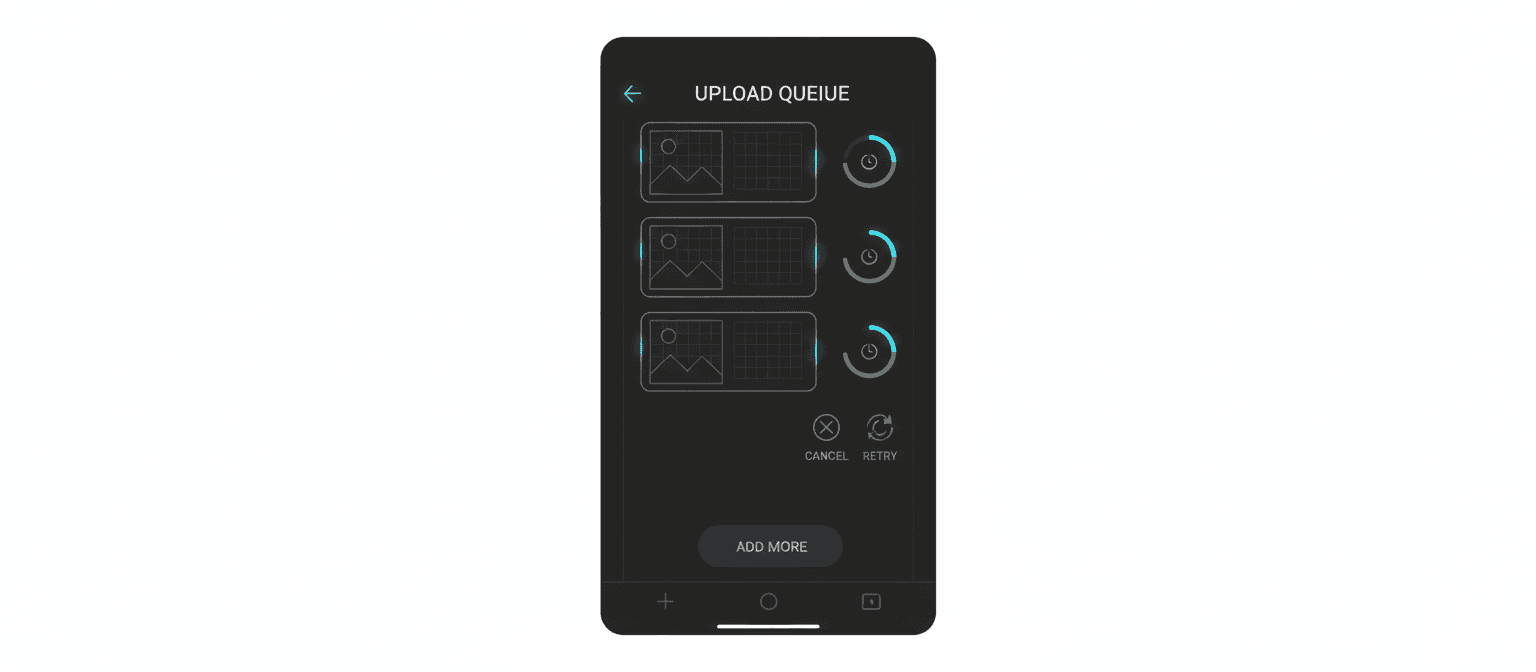
We redesigned the save-for-later flow to act as an explicit off-line vault. The app clearly emphasizes that the task is stored safely, and adds ticking visual timers to create a gentle sense of expiration urgency before the 3-hour window closes.
The Urgency UI Model
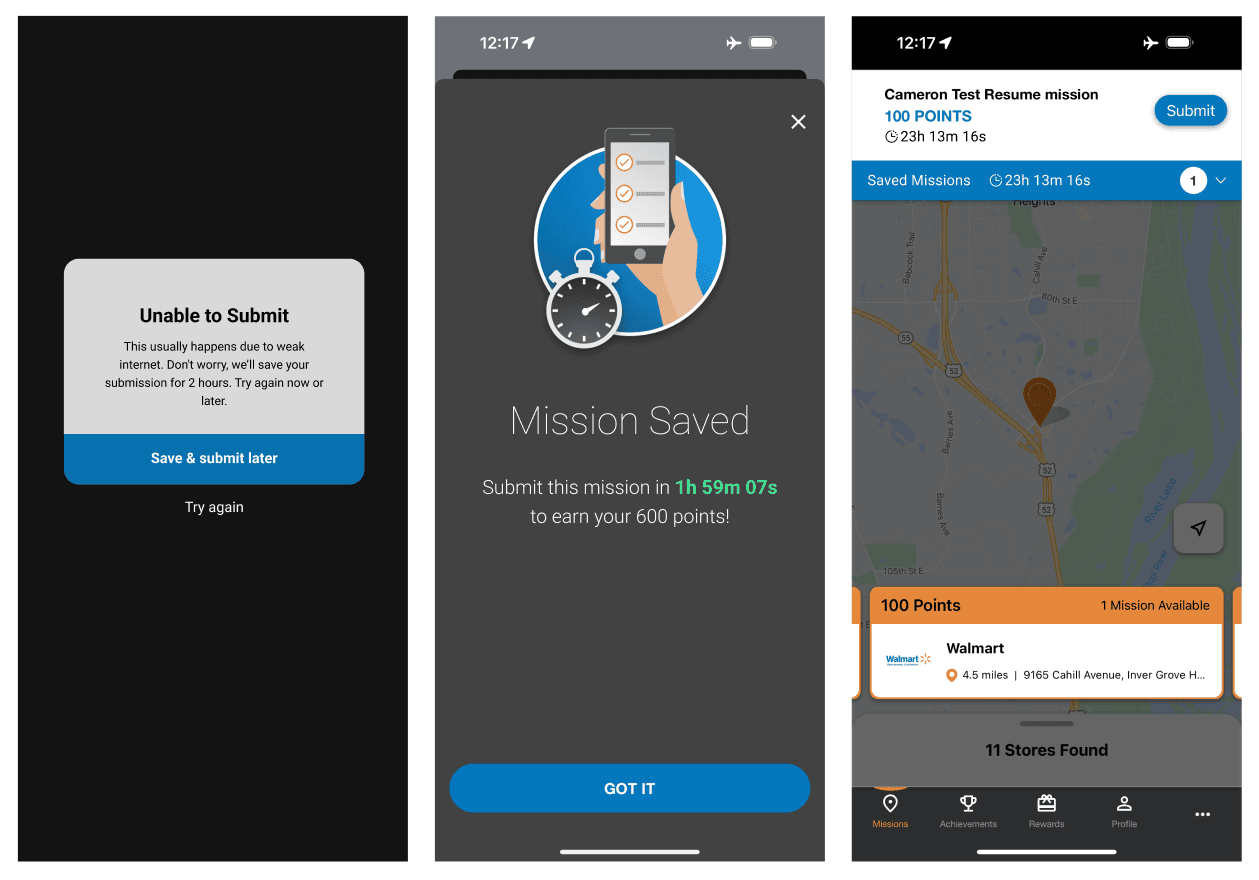
By presenting at-risk point values prominently in the persistent drawer, we activated loss aversion. Shoppers who previously forgot to upload after leaving the store were now reminded of the literal cash reward waiting for submission.
- 05 · Outcome
Stabilization at baseline levels.
Steady Stabilization and Multi-Month Trajectory
The Power of Minor Fixes
We never found a single “boulder-sized” issue during our multi-month discovery. Instead, we realized that the rewrite applied dozens of “pebble and sand-sized” friction points across devices, edge bugs, and messaging models. By progressively optimizing the interface and squashing minor timeout bugs, we successfully stabilized abandonment back to our normal 20% mark.
“The lesson was clear: beautiful software is useless if cellular data loss silently locks your users out. Prioritizing resilience over cosmetic perfection saved our launch.”
20%
Baseline Recovery
Abandonment rates returned to our normal target baseline by December 2025.
-90%
Product Quality
Reported photo timeout tickets dropped dramatically following our offline retry mechanism.
2 Hours
Uptime Recovered
Reducing the reservation window from 3 to 2 hours unblocked idle tasks faster.
- More Case Studies
Explore the full collection of work

Building something ambitious?
Building something ambitious? I'd love to help turn complex ideas into products people genuinely enjoy using.