Mobee · Letter of Authorization
Reducing Retail Survey Abandonment Through Trust-First UX
Retail survey participants frequently abandoned missions after being questioned by store employees. Rather than redesigning the survey itself, we redesigned trust. A simple authorization letter reduced hesitation, increased confidence and significantly improved mission completion.
00 - Context
My Role
Lead Product Researcher & Strategist
Designed the post-abandonment surveys, conducted shopper interviews, validated core user anxieties, and proposed the structural placebo solution.
The Product
Mobee (Secret Shopping App)
A crowdsourced retail intelligence application where independent users complete in-store photographic missions.
Key Outcome
+5% to 15%
Increase in mission coverage speed
By removing friction and anxiety, missions were claimed and executed significantly faster.
- 01 · The Challenge
Fear of employee confrontation prevented mission attempts.
Mobee shoppers enter retail stores to photograph shelf inventories. They frequently expressed intense anxiety about being confronted by store employees — support tickets overflowed with stories of shoppers feeling uncomfortable, awkward, or even being asked to leave. We set up automated post-abandonment surveys and interviews to determine if actual confrontations were causing high abandonment, only to uncover a completely different root problem.
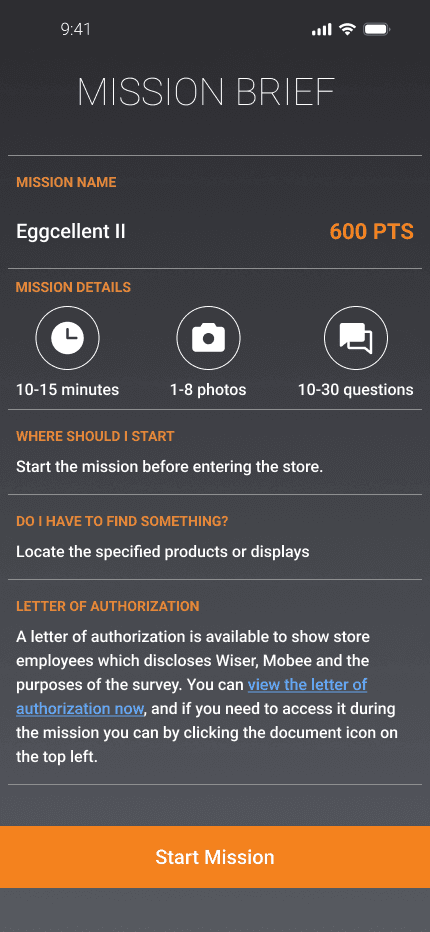
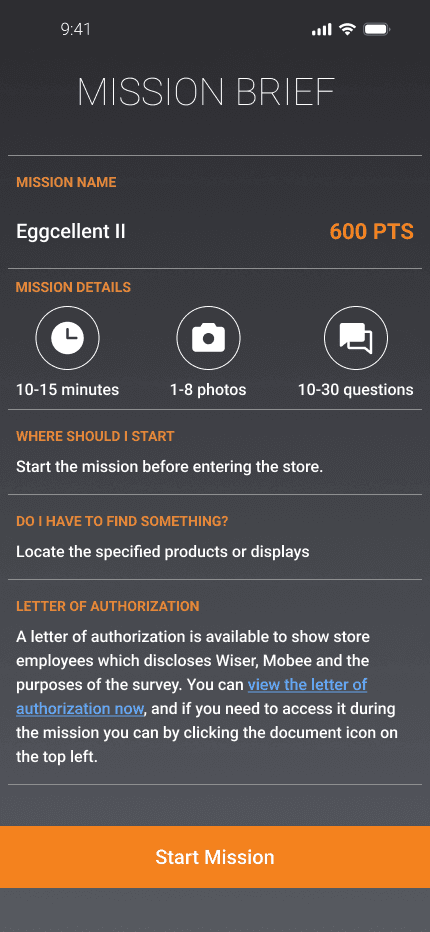
Mission Brief Screen
Letter of Authorization section at bottom
3%
of abandonments were due to actual confrontation
Post-abandonment surveys revealed that real confrontations were nearly non-existent — the problem was entirely psychological.
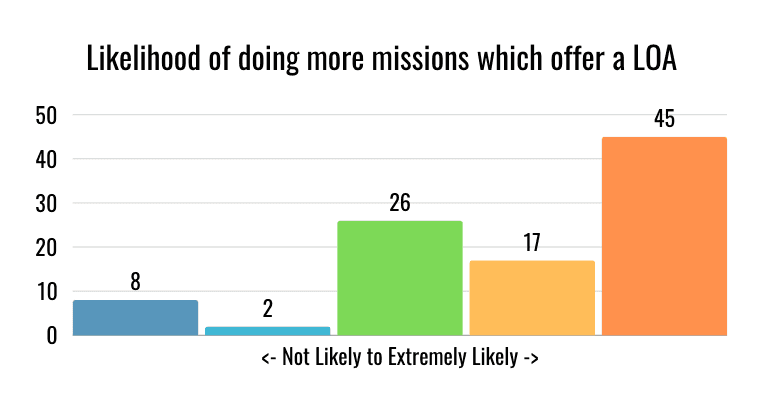
Figure 1: Survey results validated that a vast majority of users indicated they would be significantly more likely to complete missions if provided an LOA.
The Insight
The real issue was fear, not reality.
“The core blocker wasn't people actually being thrown out. It was the crushing anxiety of potentially being confronted, which stopped shoppers from ever starting.”
- 02 · Data Breakthrough
Most users weren't abandoning because the survey was difficult. They were abandoning because they didn't trust us.
Confrontation accounted for only 3% of abandons
Survey results analyzing reasons for mission abandonment revealed that being “asked to leave” was incredibly rare.
Why users avoided locations: “Keeping a low profile”
Shoppers avoided stores entirely where keeping a low profile felt too difficult — the barrier was psychological, not procedural.
Connected Insight
The real problem wasn't confrontation — it was the fear of confrontation
Only 3% were ever asked to leave, yet “keeping a low profile” was the single biggest reason shoppers avoided stores entirely. The barrier was psychological, not procedural.
Research Process
From Raw Data to Design Direction
The discovery board below captures the multi-source research synthesis that reframed the abandonment problem — from a task difficulty issue to a trust and fear-of-confrontation issue.
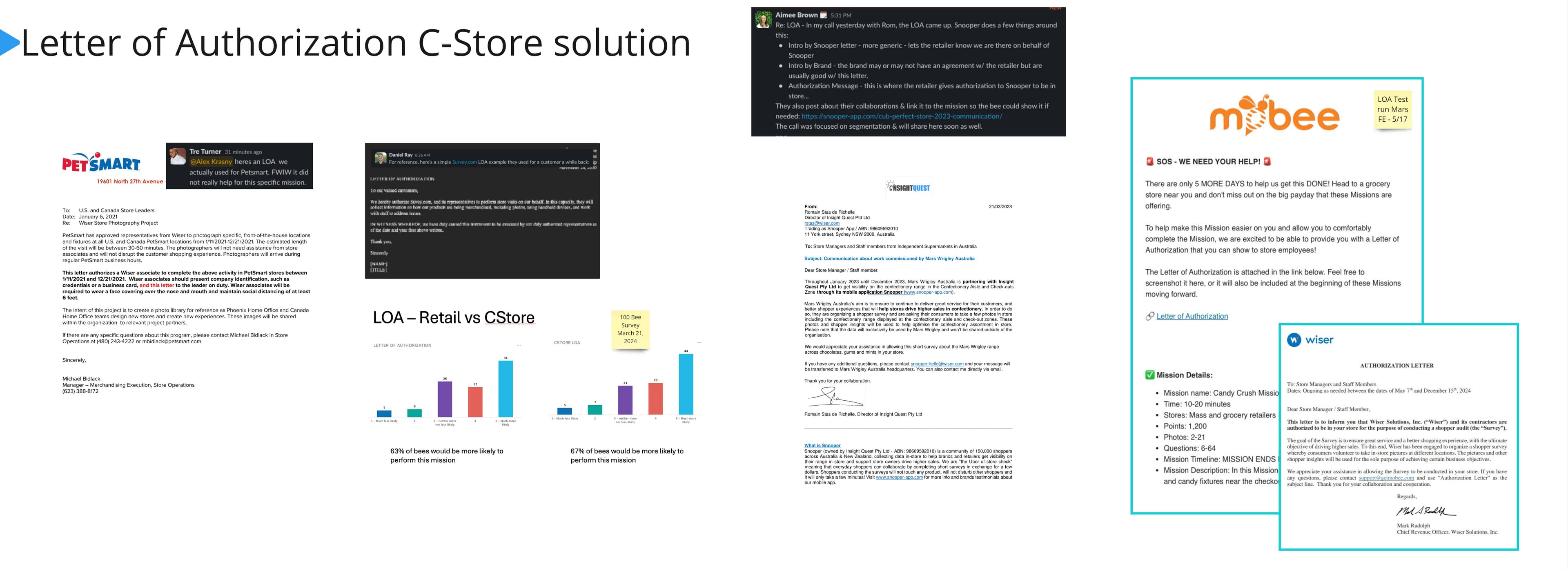
Retail stores responded 3× better to an LOA than convenience stores.
Cross-referencing abandonment data with store-type avoidance confirmed fear, not difficulty, as root cause.
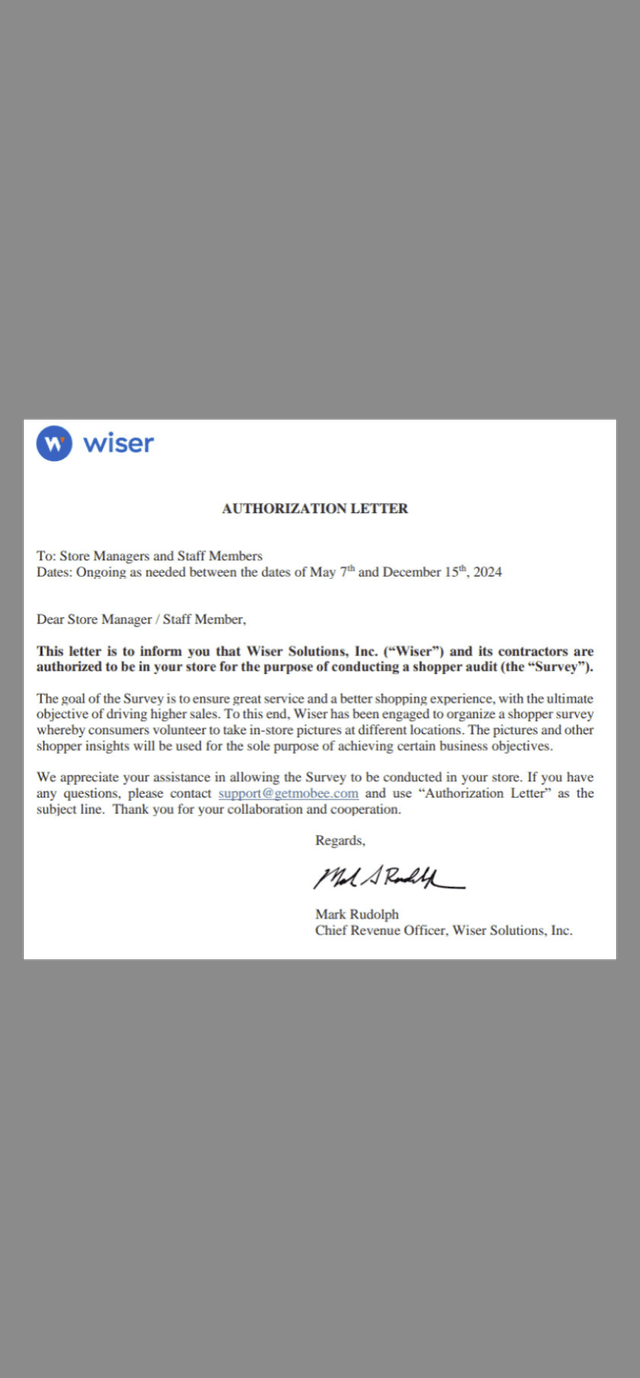
What Users Actually Do Inside the Store
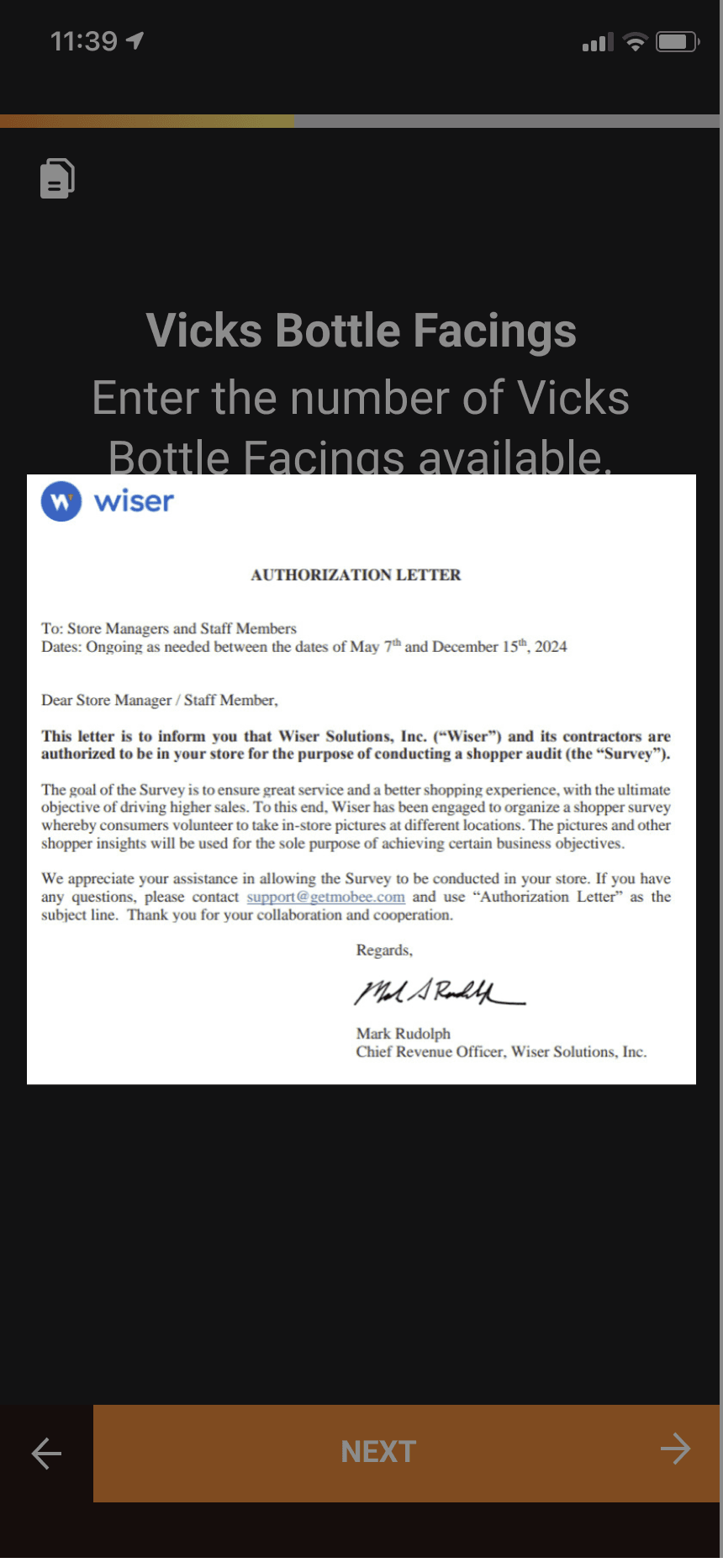
Once a shopper accepts a mission and enters the store, they are presented with structured survey questions — like counting bottle facings on a shelf. This is the core task that generates retail intelligence data for brand clients.
Crucially, the LOA banner is visible at the top of the mission screen, giving shoppers persistent access to the document at the exact moment they might need it — a key design decision that reinforced confidence throughout the task.
“The ultimate solution wasn't getting formal retail permissions. It was designing a physical artifact that converted vulnerability into absolute confidence.”
- 03 · The Solution
The Letter of Authorization: a placebo that powered UX.
The Problem
User Anxiety & Hesitation at the Store Entrance
Retail audits are fully legitimate — but the inherent ambiguity left shoppers feeling uncertain, exposed, and unable to act with authority.
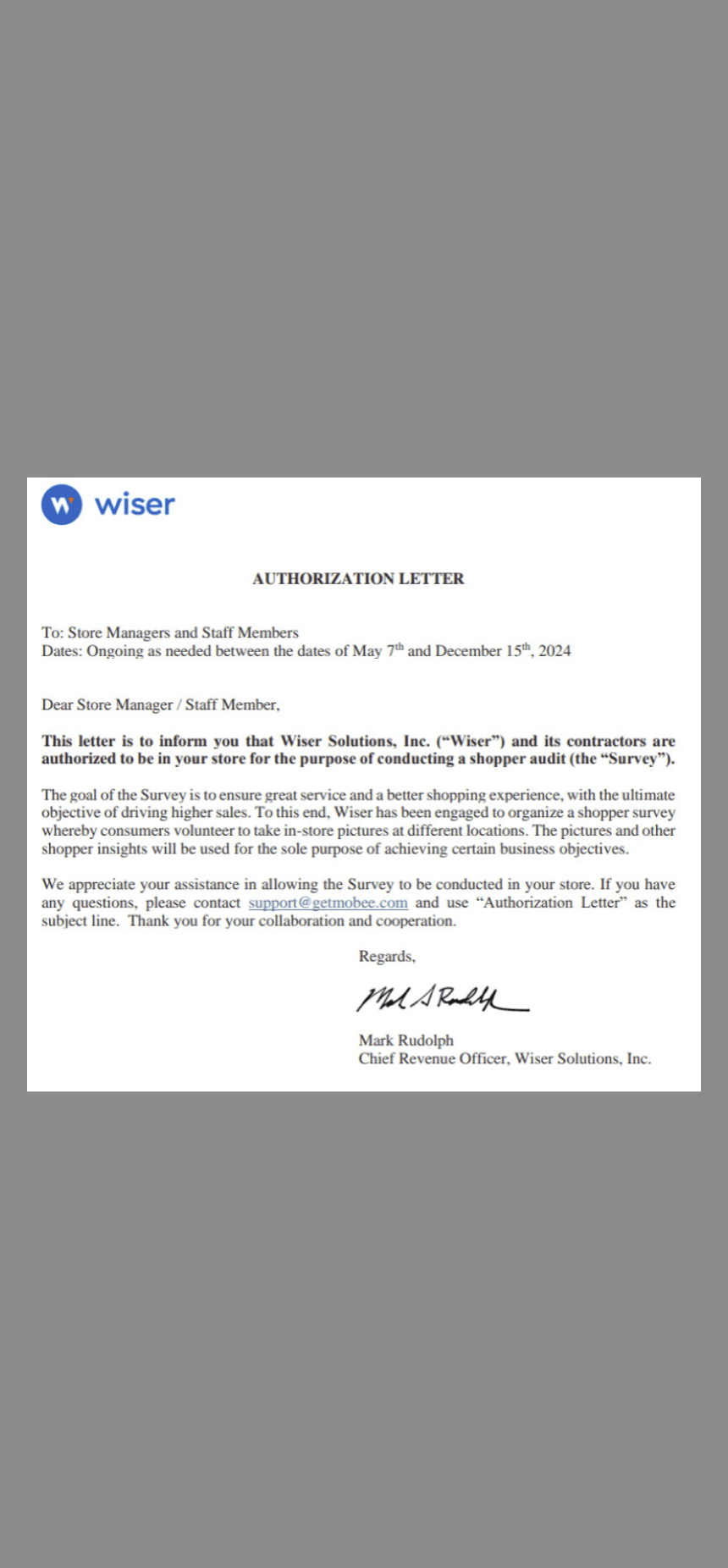
We created a formal, printable and in-app Letter of Authorization (LOA) — a psychological placebo that armed users with the confidence to navigate stores authoritatively.
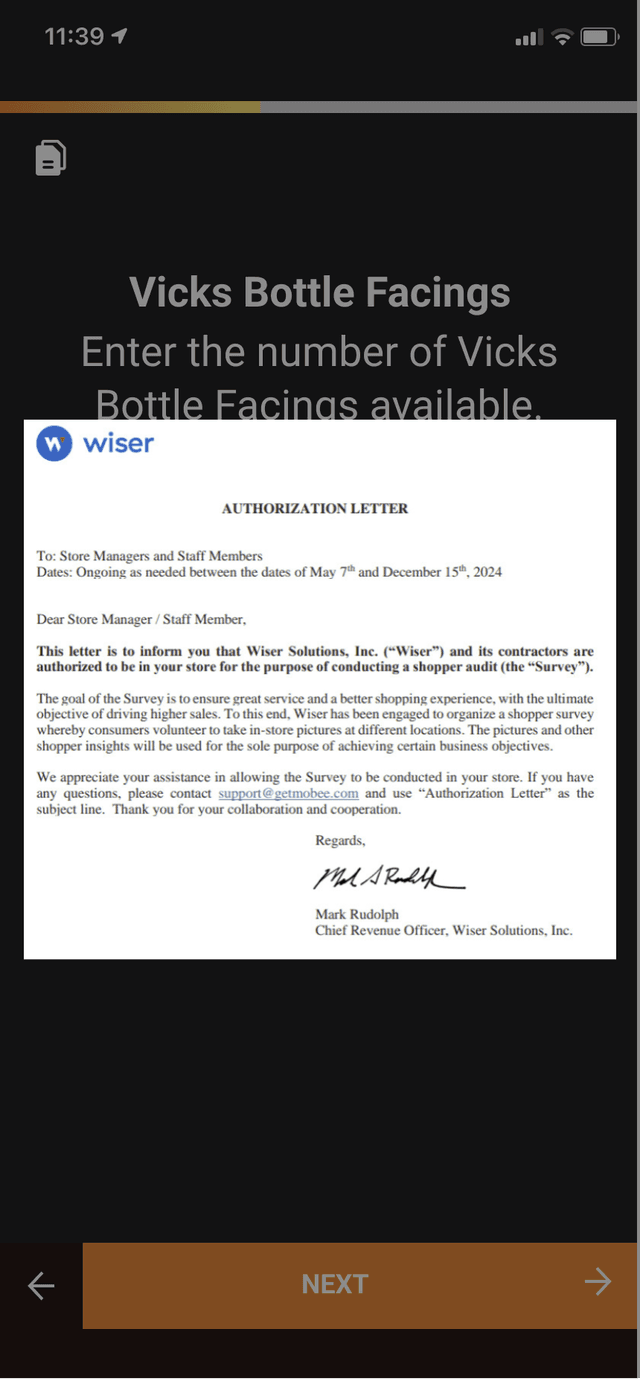
What the LOA does
Outlines purpose
Clearly states the goal of the survey: to ensure great service and a better shopping experience.
Reduces ambiguityIntroduces the company
Names Wiser Solutions as the organizing entity, providing institutional credibility on the shopper's behalf.
Institutional backingExplains the shopper's presence
Grants no actual legal access — yet gives shoppers the psychological confidence to operate with authority inside the store.
Confidence amplifierAlways accessible in-app
Available one tap away via the document icon — printable too, for shoppers who prefer a physical copy.
Zero-friction retrieval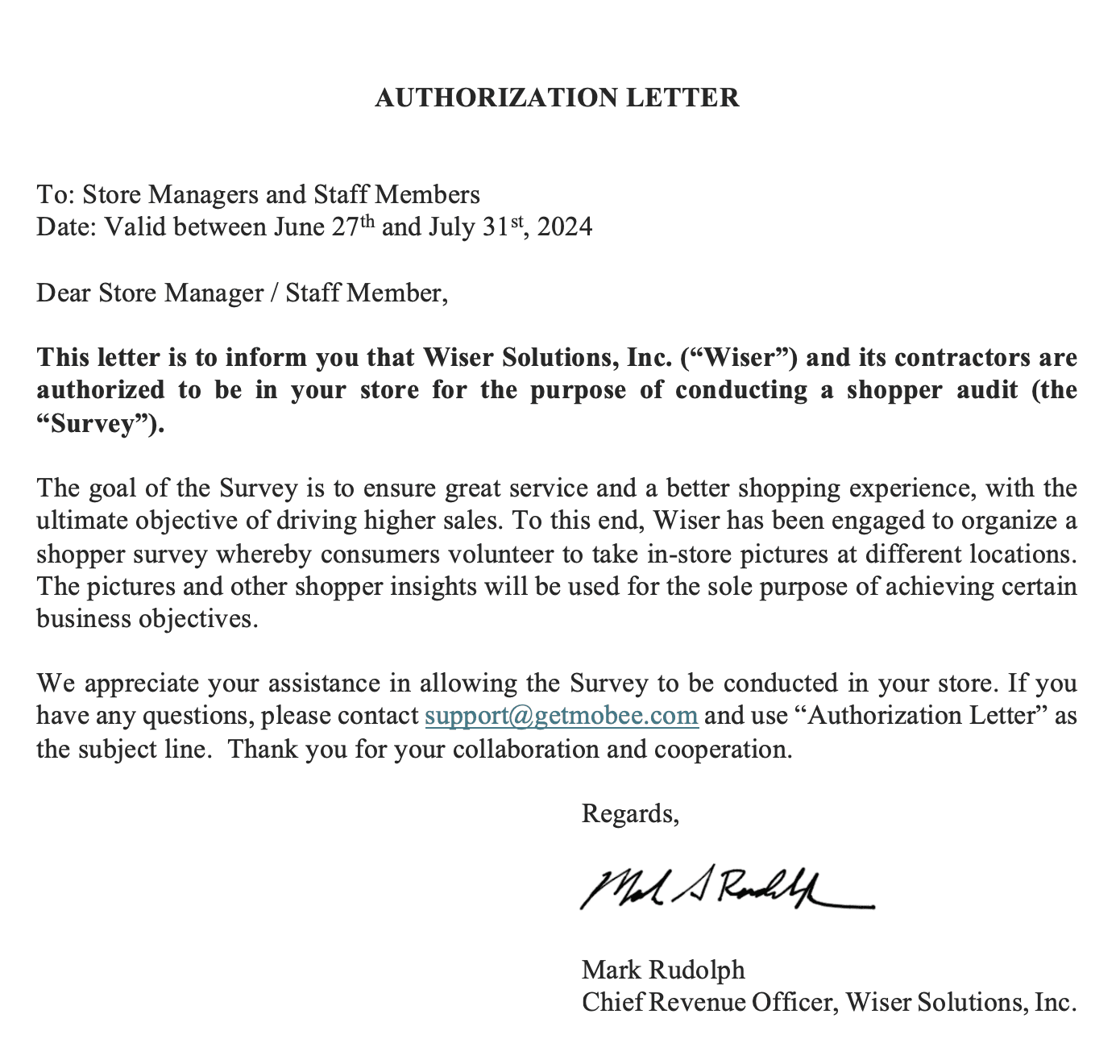
Figure 4: The official layout of the Letter of Authorization implemented directly inside the user journey.
- 04 · Outcome & Impact
Confidence is king: measured uplifts in performance.
USER ACTION
58%
→ Anxiety → Confidence
stated the LOA positively influenced their final decision to accept and perform the mission.
ACTIVATION
11%
→ Avoidance → Action
of users explicitly stated they would not have attempted the mission at all without the LOA.
CONFIDENCE
70%
→ Uncertainty → Clarity
reported a vastly higher subjective confidence level while performing store operations.
Post-Experiment Survey Results
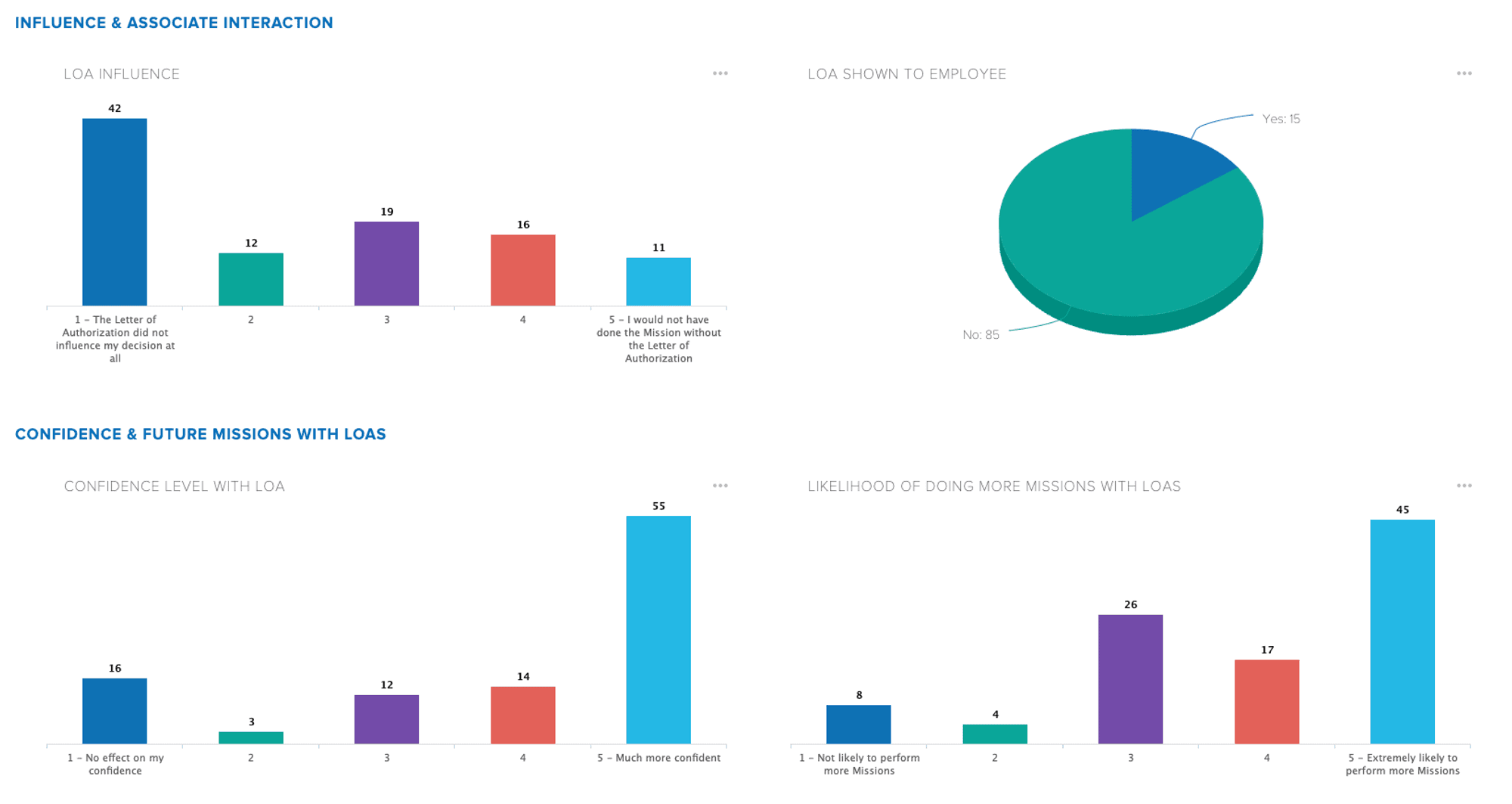
Figure 5: Comprehensive experiment outcomes. Only 15% of users actually had to present the letter to store staff, validating that the LOA acted primarily as an internal confidence-boosting mechanism.
- More Case Studies
Explore the full collection of work
Building something ambitious?
Building something ambitious? I'd love to help turn complex ideas into products people genuinely enjoy using.